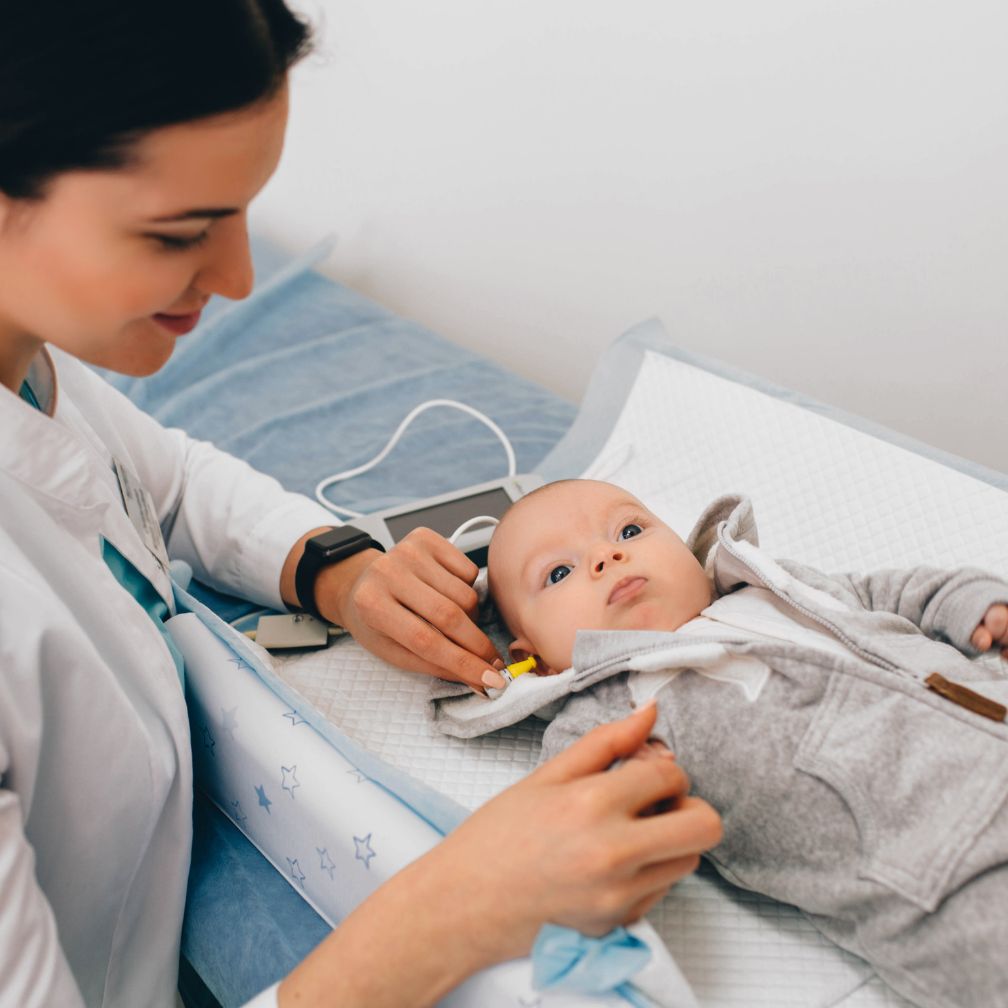
For brand-new parents, finding out that a newborn has a hearing challenge frequently produces immense mental exhaustion. Fortunately, the reassuring perspective dictates that through timely checks and early help, babies with hearing issues can realize great success. Remarkably, such young children can gain language proficiency, interpersonal traits, and lasting relationships in their community, enjoying a rich existence!
Relying on modern hearing aids and advanced cochlear implants yields two reliable clinical methods for supporting babies with hearing impairment. Further down, we explore their underlying operational methods to assist you in deciding which technology best serves your youngster.
Analyzing Infant Auditory Deficits
Hearing deficits among babies frequently result from multiple medical influences, including:
- Distinct inherited genetic traits (even when family histories show no precedent)
- Maternal congenital infections like cytomegalovirus (CMV) or rubella exposure
- Physical birth-related trauma, featuring neonate oxygen loss or early delivery
- Specific medications used in specialized neonatal intensive care
What serves as the chief goal for families? Swift clinical screening. Given these guidelines, newborns delivered in United States hospitals complete hearing screens prior to heading home. Leading pediatric hearing professionals implement the official “1-3-6” target timetable:
- Primary baseline screening completed within the first month
- Complete clinical diagnosis established before 3 months of age
- Early care (incorporating amplification systems or active therapy) initiated inside 180 days of birth
Reaching these early milestones provides infants optimal opportunities for healthy speech, language, and brain development. If you want guidance about these testing stages, your pediatrician will gladly offer support!
Deploying Hearing Aids for Newborns
For infants impacted by mild to severe hearing loss, specialized hearing aids consistently serve as the foundational first step. Such lightweight, wearable tools amplify acoustic waves, enabling babies to hear spoken dialogue and environmental sounds much more clearly.
Modern infant hearing instruments function as:
- Completely safe for young infants as young as a few weeks old
- Crafted featuring soft, skin-friendly ear inserts that adapt during early physical development
- Assembled with locking battery compartments and specialized safety features geared toward babies
- Individually programmed by a certified pediatric audiologist to align with your child’s hearing needs
During physical development, hearing aids necessitate regular clinical recalibrations to guarantee proper fit and maximum performance.
Pediatric Cochlear Implants: An Advanced Solution
Should an infant suffer from severe to profound sensorineural auditory loss with limited benefit from wearable hearing aids, clinicians often recommend a cochlear implant. Diverging significantly from traditional hearing devices, cochlear implants:
- Entail precision surgical insertion inside the inner ear delivering direct electrical signals to the brain
- Completely circumvent non-functional elements of the inner ear system
- Process incoming sound into refined electrical impulses that directly excite the hearing nerve
Standard cochlear implants remain:
- Granted official FDA clearance for children starting at 9 to 12 months old
- Uniquely successful when paired with early therapy and family support
- Cleared strictly after comprehensive clinical evaluations by an expert audiologist and ENT specialist
Such a comprehensive process requires neuroimaging scans, detailed hearing tests, and setting realistic expectations for future communicative success.
Hearing Aids or Cochlear Implants: Distinguishing Features
- Mild to severe hearing challenges suit Hearing Aids; Severe to profound auditory destruction warrants Cochlear Implants
- Non-Invasive: Hearing Aids; Invasive surgical installation: Cochlear Implants
- Acoustic volume boosting: Hearing Aids; Electrical signal stimulation conversion: Cochlear Implants
- Treatment starts in newborn infancy: Hearing Aids; Access starts at 9-12 months: Cochlear Implants
Hearing Aids vs. Cochlear Implants: Final Thoughts
Should your baby receive a formal hearing loss diagnosis, you can rely on excellent technological options and dedicated expert support. With the help of pediatric hearing specialists, numerous children grow to master language capabilities completely equal to their hearing peers.
Whether your child is a candidate for hearing aids or cochlear implants, early intervention can make a lifelong difference.
Do you need professional advice regarding your baby’s current hearing health? Contact our staff today to obtain an exhaustive evaluation and custom-designed care plan.