
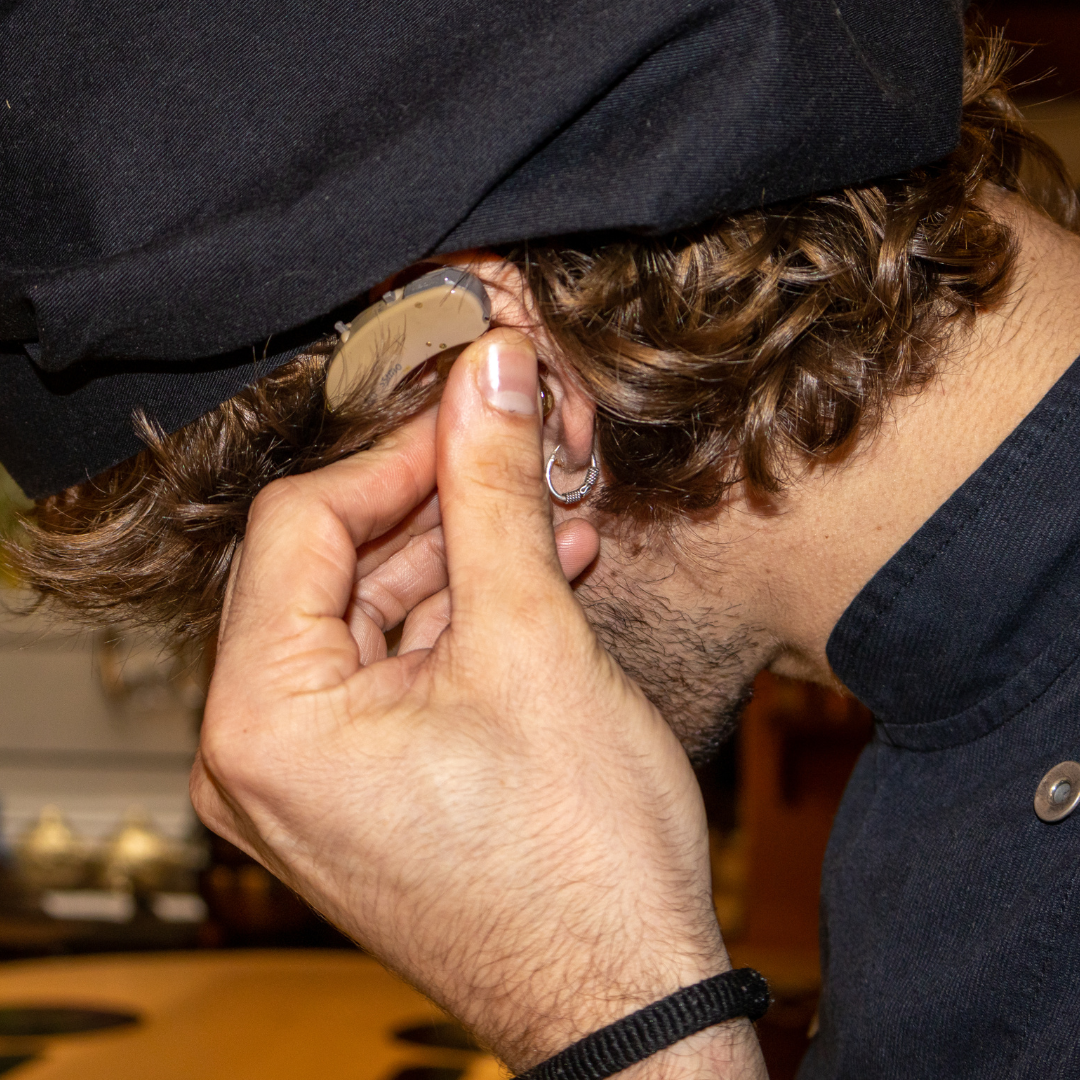
Following dinner conversations becomes challenging when high ambient noise interferes with your focus and hearing. Our practice provides targeted diagnostics to evaluate hearing in quiet atmospheres as well as complex noise environments. After diagnosing the source of your difficult hearing, we design targeted interventions tailored to your listening needs.
Explaining Normal Quiet Hearing Versus Restaurant Listening Fatigue
A tranquil environment produces a beneficial signal-to-noise ratio where spoken dialogue easily overpowers weak ambient noise. Busy dining establishments generate the exact reverse scenario. Background voices, loud music, service clatter, and wall reflections collide with spoken words, demanding heightened cognitive processing to isolate individual speech.
Such listening challenges typically stem from high-frequency hearing loss, auditory-processing deficits, or accumulated noise-induced trauma. Dim lighting, physical tiredness, conversational distance, and divided attention exacerbate these listening deficits. Numerous individuals show standard hearing thresholds on paper but reveal marked comprehension drops on clinical speech-in-noise testing. Disproportionate difficulty in restaurants justifies professional clinical assessment even if your everyday home hearing appears intact.
Diagnosing High-Frequency Hearing Loss and Clarity Issues
We initiate evaluation by exploring challenging acoustic environments, acoustic trauma history, subjective tinnitus, prescription drug profiles, and unilateral ear changes.
Pure-tone audiometry measures the softest sounds you can hear at different pitches through air and bone conduction. High-frequency loss often creates an audiogram pattern in which thresholds become poorer as pitches rise. Additional testing may include tympanometry to assess middle-ear function and word-recognition testing to measure speech understanding.
Standard quiet test booths fail to simulate real-world restaurant noise, making speech-in-noise testing a crucial clinical tool. The test assesses word and sentence discrimination as background acoustic competition intensifies. Collectively, these evaluations clarify if your challenges relate to raw audibility, phonetic clarity, signal-to-noise processing, or compound factors.
Auditory Processing Disorders: Impact on Adult Communication
A central auditory processing disorder disrupts the neurological transmission and cognitive interpretation of sound waves. A patient’s ears may demonstrate normal pure-tone sensitivity, but their central processing system struggles to separate background babble, distinguish consonant sounds, or follow swift discussions. Our clinical team starts by examining peripheral auditory thresholds, subsequently deciding if an auditory-processing test battery or multidisciplinary consultation is necessary.
How to Improve Speech Clarity in Challenging Acoustic Environments
Targeted behavioral changes optimize the acoustic speech signal reaching your auditory system while providing clear visual context. When planning to dine out, select restaurants with calmer atmospheres or arrange reservations during off-peak hours. Venues with booths, acoustic panels, curtains, carpeting, and other sound-absorbing features may be easier than open rooms filled with hard surfaces.
Practical seating strategies in the dining room:
- Reserve a table located well away from kitchen doors, active bar counters, overhead speakers, and banquet groups.
- Situate yourself with a structural wall behind you to minimize distracting ambient noise from behind.
- Seat yourself facing conversation partners under clear, bright lighting to facilitate visual speechreading.
- Maintain the shortest comfortable physical distance between yourself and your conversation partner.
- Position your better-hearing ear directly toward your main conversational partner.
- Request that companions rephrase misunderstandings using different words rather than repeating the same sentence.
- Clarify critical details explicitly instead of nodding along or pretending to catch the message.
- Take a brief listening break when fatigue begins to build.
- Ask companions to speak clearly at a natural pace.
- Raised or shouting voices warp acoustic phonetics and rarely improve speech intelligibility.
Modern Audiological Tools for Managing Background Noise
Choosing the most effective auditory device requires evaluating diagnostic findings, acoustic lifestyle factors, and the presence of hearing loss. Professionally fitted hearing aids may use directional microphones, digital noise reduction, and dedicated restaurant programs to emphasize speech from the front and reduce some competing sound. Realistic expectations are vital, since even advanced hearing devices cannot completely erase background conversational chatter.
Utilizing an external remote microphone can deliver a dramatically superior signal-to-noise ratio. Clipped near the speaker’s mouth or set nearby, the transmitter sends voice signals wirelessly to matched hearing aids or a receiver. This wireless transmission substantially diminishes the acoustic degradation caused by physical distance and ambient room noise.
Other clinically valuable tools include:
- Portable table microphones for managing multi-speaker dinner conversations
- Telecoil sensors configured to access hearing-loop broadcasts in looped facilities
- Mobile speech-to-text applications delivering instant visual captions during dinner
- Earbuds or hearables with compatible assistive-listening features
- Decibel-level applications and restaurant rating guides for finding quiet tables
Our audiology staff helps you evaluate options, ensures wireless compatibility, and trains you on operating your chosen equipment.
How Medical and Audiology Specialists Resolve Hearing in Noise
A comprehensive hearing evaluation looks far beyond the common misconception of “I hear fine in quiet environments.” We assess the specific acoustic settings, speaker dynamics, and volume levels that disrupt your hearing to administer targeted evaluations. Testing routinely combines pure-tone audiometry, middle-ear impedance tests, speech discrimination, and speech-in-noise measures. Dedicated central auditory-processing testing will be scheduled if your history and primary diagnostic testing indicate central pathway issues.
Sudden unilateral hearing drops, acute asymmetric changes, or rapid auditory decline mandate evaluation by an ear, nose, and throat physician. Individualized diagnostic care pinpoints the precise physiological etiology rather than merely blaming restaurant noise for communication struggles.
Request an Audiology and Hearing Evaluation Today
If crowded restaurant settings cause you to feel disconnected, tired, or forced to guess at conversations, arrange a diagnostic hearing evaluation today. Our clinical team will determine the best strategies to improve your hearing in noisy environments through custom hearing-aid programming, remote microphones, or targeted auditory rehabilitation.
Get in touch with our team to request an appointment and rediscover confident, stress-free restaurant conversations.