
A primary reason individuals put off addressing auditory deficits is the assumption that assistive devices will be unsightly or awkward to wear. Such reluctance is perfectly natural when you consider past technology! Furthermore, many individuals harbored deep anxieties about social isolation, fearing others would exclude them from discussions based on assumptions of cognitive decline or profound auditory deficits.
This obsolete perception remains deeply embedded in the public consciousness, creating a massive barrier to proactive treatment. However, contemporary medical engineering has ensured that current hearing solutions look and function in a completely unexpected manner. Thanks to rapid technological evolution, modern devices are remarkably downsized, highly ergonomic, and exceptionally covert.
If cosmetic anxiety has caused you to delay treating your hearing loss, it is highly recommended that you evaluate the sophisticated options now available.
Dispelling the Myth: Modern Devices Have Transcended Older Styles
If you close your eyes and picture a hearing aid, you might imagine something large, hooked over the ear, and visible from across the room. If that description matches your mental model, your perceptions are anchored in the primitive analog technology of the late twentieth century.
Since then, the entire category has evolved. Unprecedented breakthroughs in microchip architecture, material sciences, and digital signal processing have utterly revolutionized modern aesthetics. Today’s instruments are profoundly smaller, remarkably streamlined, and strategically engineered to blend flawlessly into your natural anatomy or vanish altogether.
A substantial percentage of contemporary options reside deep within the auditory canal, ensuring absolute invisibility during routine face-to-face interactions. Alternatively, post-auricular models are constructed with such streamlined dimensions that they disappear against the scalp, customizable to complement individual skin and hair coloration.
Primary Hearing Aid Styles, From Invisible to Barely There
If you are curious about the structural choices available for your rehabilitation, here is an accessible overview of current styles:
The Invisible-in-Canal (IIC) Form Factor
These are as discreet as it gets. The IIC style fits exclusively within the deep internal canal and is built using a custom impression of the patient’s ear passagographic anatomy. During typical face-to-face communication, these custom models remain completely obscured from view. They remain an exceptionally sought-after solution for patients with mild-to-moderate deficits who refuse to compromise on cosmetic privacy.
The Versatile Receiver-in-Canal (RIC) / Receiver-in-the-Ear (RITE) Style
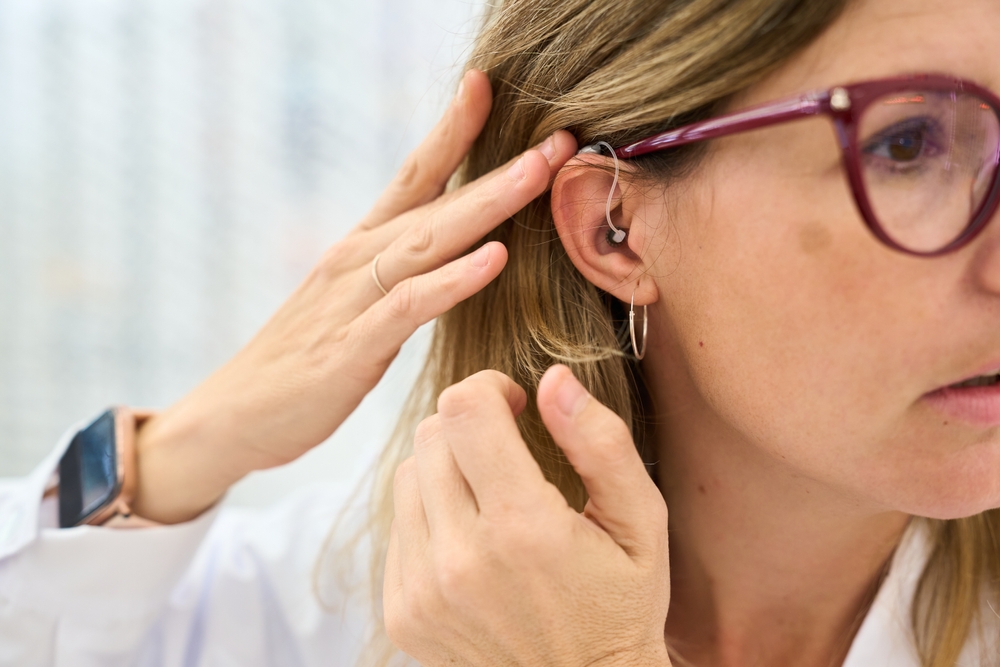
This particular layout has become the benchmark standard for contemporary hearing health restoration. The system utilizes an incredibly small housing resting behind the ear, linked by a hair-thin translucent cable to a miniature speaker within the ear pathway. To onlookers, this streamlined design closely mirrors fashionable consumer electronics or sports earbuds. The vast majority of peers will fail to perceive the apparatus unless conducting a highly deliberate close-up inspection.
Traditional Behind-the-Ear (BTE) Reimagined
While these models house all electronic components within a casing resting behind the pinna, their dimensions are drastically reduced compared to legacy models. Clinically indicated for profound or severe hearing deficits, they deliver immense acoustic power without the outdated, conspicuous mass of the past.
The bottom line is simple: modern assistive hearing systems are crafted to serve your life quietly, not to draw attention to your ears.
Modern Hearing Aids: Looking Better and Doing a Lot More
The changes in modern hearing aids aren’t just cosmetic. Today, they function more like smart devices than traditional medical equipment. Most current systems boast universal wireless syncing, channeling smartphone calls, high-definition music, and television broadcasts directly to your internal receivers.
Equipped with dedicated smartphone applications, they allow users to manipulate volume matrices or toggle environmental programs without making manual physical adjustments. Say you’re walking into a noisy restaurant: You can fine-tune your hearing to match the environment in seconds. Rechargeable batteries have also replaced the tiny ones people used to struggle with. You merely dock the devices on a nightstand inductive charger, exactly like replenishing your mobile phone.
Dismantling the Emotional Stigma of Auditory Assistance
Despite being aware of these massive design improvements, it is entirely normal to feel a sense of hesitation. Scheduling an appointment can feel like a profound internal challenge because it represents an open admission of sensory alteration. This mental hurdle can make an individual feel exposed, creating a false impression of losing authority over personal wellness.
Consider a healthier perspective: wearing a contemporary hearing system does not mean your body has failed you. Rather, they represent a proactive response to natural biological evolution—a transition shared by every human being. Choosing to hear better is absolute evidence that you are choosing to optimize your body and enhance your overall quality of life.
Imagine wearing a discreet, barely (if at all) visible device and finally being able to follow along in conversation, hear better in crowds, and focus on the things that really interest you. This is the definition of true personal empowerment!
Experience Contemporary Hearing Technology Firsthand
The most effective method to permanently banish an obsolete stereotype is to personally examine current clinical options. Our clinical team cordially invites you to visit our facility, interview our staff, and evaluate different form factors in a stress-free, zero-obligation environment. Think of your visit as an educational open-house to experience the lightweight engineering of modern hearing instruments firsthand.
The overwhelming majority of our patients leave their consultation thoroughly amazed by the compact scale, luxurious comfort, and acoustic clarity of current technology! Do not let outdated myths delay your wellness—call our specialized practice or book your appointment online today.